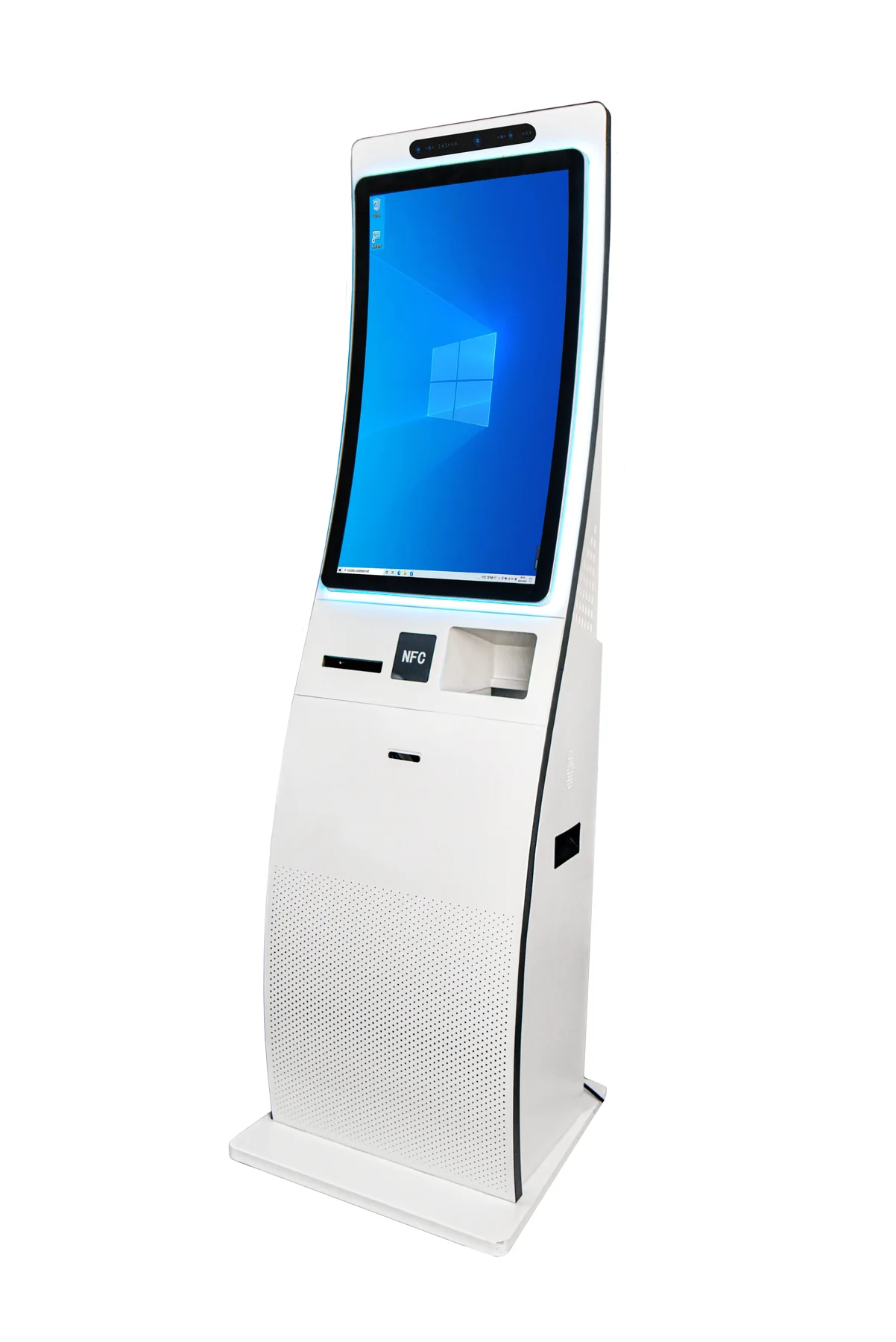
A hotel self check-in kiosk guide covering passport scanning, room-card dispensing, payment, printing, software integration and cabinet planning.
Document the guest journey
List reservation lookup, identity verification, payment, registration, room assignment, card encoding and receipt steps. Note where staff approval or exception handling is required.
Confirm identity and room-card modules
Passport scanners and room-card dispensers vary in size, interface and software support. Select the exact models before the cabinet is released for production.
Define the property-system boundary
The kiosk hardware must connect with the customer's hotel application and property management workflow. Confirm operating system, SDK or API needs, network policy and application ownership during technical review.
Design for continuous guest access
Consider nighttime use, privacy, accessibility, paper and card replenishment, remote support and safe maintenance access. These operating details influence the final enclosure.
Buyer specification and acceptance checklist
Hotel self-check-in is a coordinated workflow across reservations, guest verification, payment and room access. Define which decisions the kiosk can complete and which require reception staff. The hardware specification should follow the approved guest journey and the interfaces made available by the property-management and door-lock providers.
| Decision | What to specify | Evidence to request |
|---|---|---|
| Reservation | Identify the property-management system, version and reservation lookup method. | Find a valid booking and handle an unmatched reservation without exposing other guests’ records. |
| Room access | Identify the lock system, card type, encoder and dispensing responsibilities. | Test the issued card at the intended door system and verify the room assignment. |
| Exceptions | Document early arrival, unavailable rooms, failed payment and card-dispensing errors. | Route each exception to reception with enough information to resume service. |
| Session privacy | Define what guest data may appear on-screen and who owns retention and access decisions. | Verify that the next guest cannot view the previous session after completion or timeout. |
What should the prototype acceptance test include?
An acceptance test should include a complete check-in using the intended PMS and lock-system integration. Repeat the journey with an unavailable room, an interrupted connection and an unsuccessful card issue. Agree how reception completes the transaction manually and how the application prevents a second unintended charge or key issue. Review deployment-specific privacy and identity requirements with the hotel’s responsible advisers.
Frequently asked procurement questions
Can a hotel check-in kiosk replace every reception task?
That depends on the service model and application scope. Define staffed escalation for exceptions, accessibility needs and guest assistance. A procurement plan should describe the fallback service rather than assuming every reservation can be processed unattended.
Does the hotel kiosk support every PMS and door-lock brand?
Do not assume universal compatibility. Obtain confirmation for the specific software version, interface access, card format and encoder. Request a working integration test before production approval and document who supports changes made by the hotel-system vendors.
Related planning resources
These are procurement planning checks, not a promise that every model includes every function. Confirm the selected configuration, software scope, compliance evidence and acceptance criteria in the project quotation.