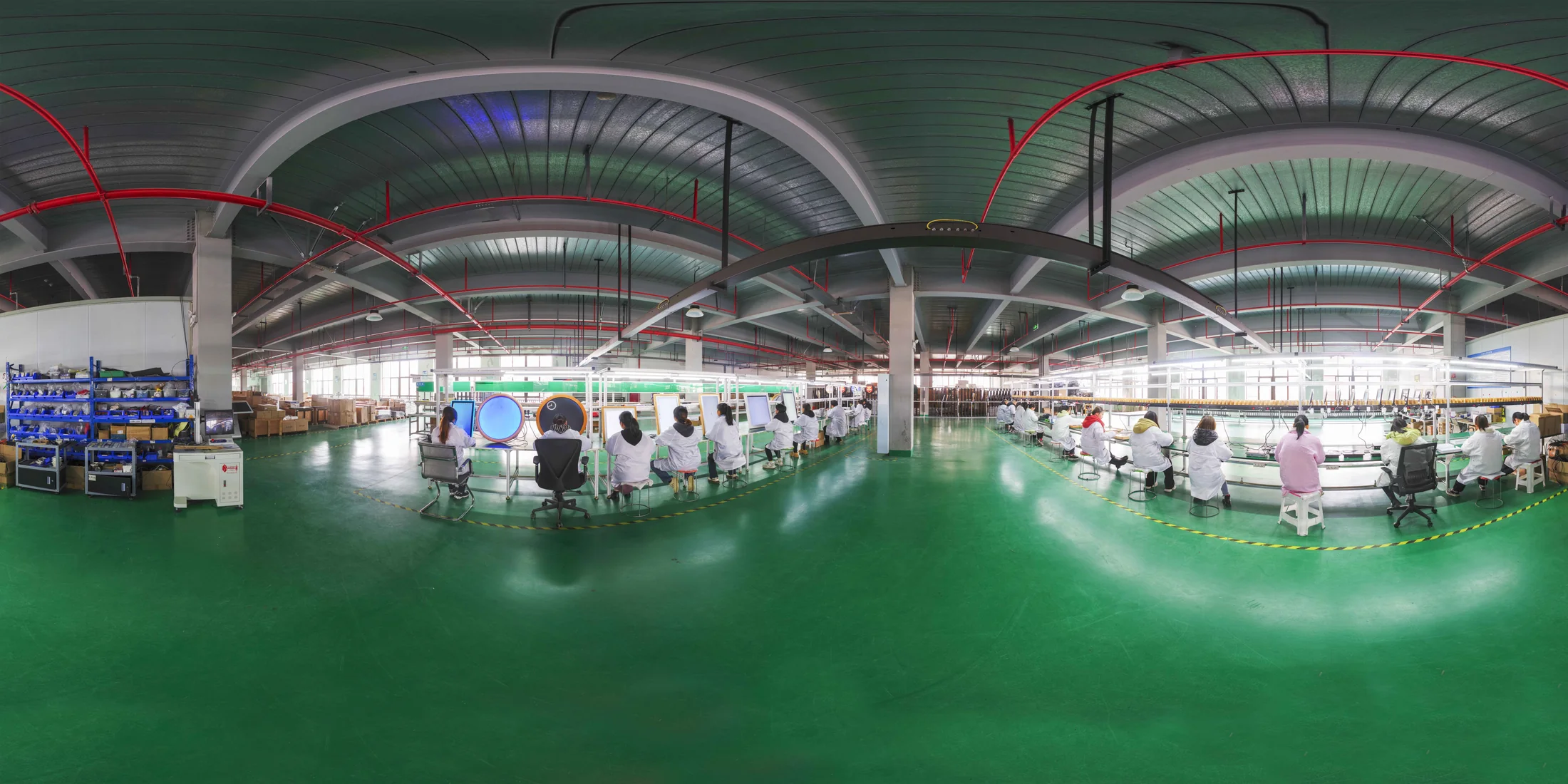
See how a custom kiosk OEM/ODM project moves through requirements, engineering, prototype review, verification and production handoff.
Prepare the project brief
Share the application, target market, quantity, timeline, preferred appearance, operating system, peripherals and software ownership. Reference images help communicate direction but do not replace engineering requirements.
Develop the technical definition
Usingwin engineers review cabinet structure, hardware selection, module placement, interfaces, thermal needs, service access and production feasibility. Initial design material is prepared for customer review.
Review and prototype
Customer comments are incorporated before sheet-metal production. The prototype then provides a physical reference for appearance, assembly, peripheral fit and integration testing.
Verify the approved configuration
The quality flow includes incoming inspection, in-line production tests, full-function unit testing, 24-48 hour burn-in, finished-product inspection and a pre-shipment check.
Move to production
Custom OEM/ODM orders typically require about 30 days after the design is confirmed. Final lead time and MOQ depend on project complexity, material availability and the approved configuration.
Buyer specification and acceptance checklist
An OEM/ODM kiosk project needs documented approval points between requirements, engineering, prototype testing and production. Treat a concept image as a discussion aid, not as an approved manufacturing specification. Keep the mechanical design, bill of materials, application boundaries and acceptance criteria aligned throughout the project.
| Decision | What to specify | Evidence to request |
|---|---|---|
| Project brief | Provide the intended application, installation constraints, peripheral list and target market. | Agree which requirements are mandatory and which remain open decisions. |
| Design review | Review drawings, module placement, service access, interfaces and the proposed bill of materials. | Record the approved version and unresolved technical questions. |
| Prototype review | Use the agreed application and peripherals for workflow and service testing. | Record deviations, corrective actions and the buyer’s acceptance decision. |
| Production handoff | Confirm the approved configuration, inspection criteria, packing and change-control process. | Check that production documents match the accepted prototype or approved revisions. |
What should the prototype acceptance test include?
Create a responsibility table covering enclosure engineering, application software, peripheral procurement, testing and any market-specific approvals. If a module changes after prototype acceptance, review whether the change affects fit, power, thermal behavior, drivers or test results. A change request should identify the affected drawing and bill-of-materials version so that the delivered machines remain traceable to the approved configuration.
Frequently asked procurement questions
What should a buyer send before requesting an OEM/ODM quotation?
Send a workflow description, installation sketch, required peripherals, software responsibilities, target market and expected quantities. Identify any fixed module choices or interface constraints. These inputs allow suppliers to separate standard configuration from custom engineering work.
When should a custom kiosk move from prototype to production?
Proceed when the agreed acceptance criteria are satisfied and outstanding changes have an approved disposition. Record the configuration, software assumptions and inspection plan. A visually approved sample alone does not establish that integration, servicing and production documentation are complete.
Related planning resources
- Review Usingwin OEM/ODM capabilities
- Review factory and quality information
- Check the certificate library and scope
These are procurement planning checks, not a promise that every model includes every function. Confirm the selected configuration, software scope, compliance evidence and acceptance criteria in the project quotation.