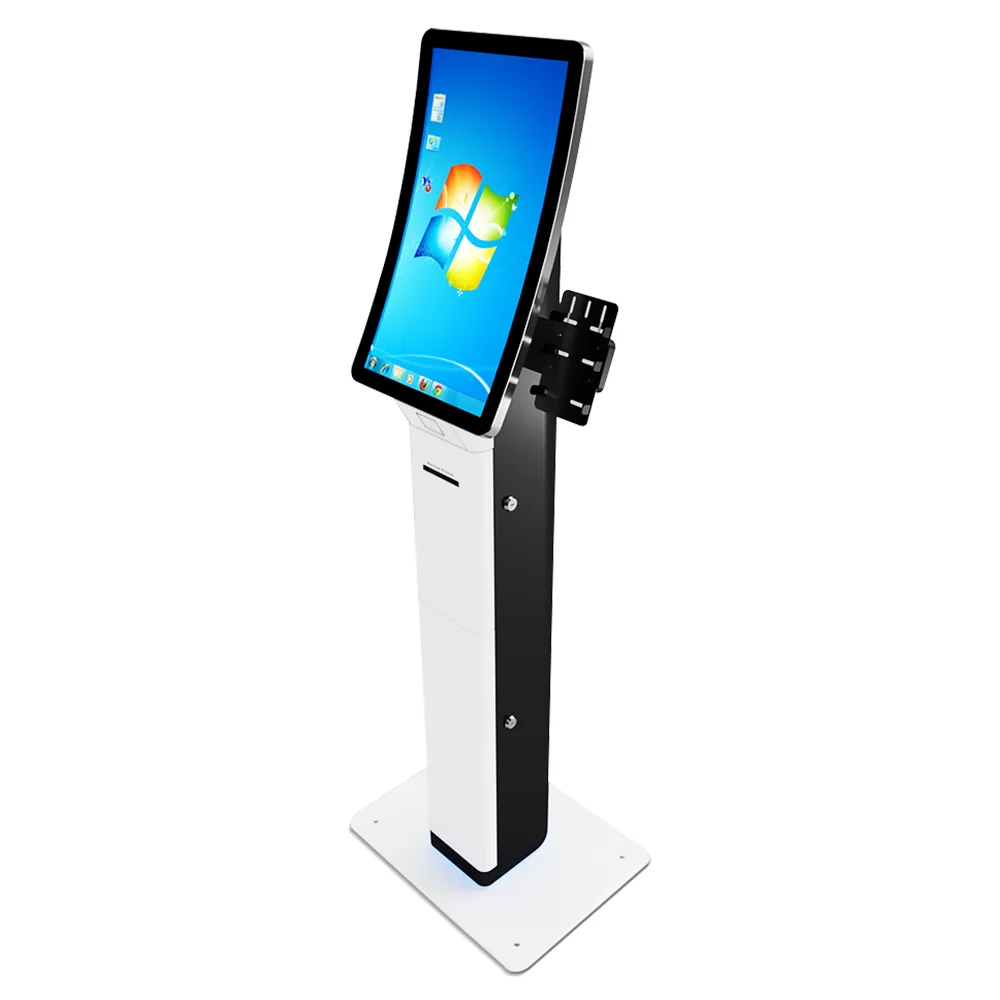
Self-Checkout Shrink: Why Buyers Now Specify AI Monitoring + a Cash Recycler
US retail shrink climbed to a decade-high in FY2022 — the National Retail Federation’s annual retail security survey put average shrink at 1.6% of revenue, roughly $112 billion in industry losses, up from 1.4% the prior year — and the debate over self-checkout as a leakage point has only intensified since. The market response is not to tear self-checkout out. For OEM and ODM buyers, the shift is to self-service lanes that pair AI-assisted loss prevention with a cash-recycling closed loop, so an unattended lane guards both the goods and the cash. If you are specifying a kiosk or cash lane for a retail rollout, the purchase decision now turns on two modules — AI-ready monitoring and a cash recycler — not just a scanner and a printer.
Why pure self-checkout is retreating — and what is replacing it
Retail shrink — inventory lost to theft, error and fraud — is tracked in the National Retail Federation’s annual retail security survey. Its most recent published survey, for FY2022, put average shrink at 1.6% of revenue — about $112.1 billion in losses, up from 1.4% in FY2021 and the highest rate in over a decade (the NRF has since shifted its reporting methodology and did not publish an annual shrink survey in 2024). Self-checkout lanes were frequently singled out as a leakage point. Retailers responded two opposite ways: a minority removed self-checkout entirely, while the larger trend is to keep unattended lanes but harden them.
The replacement architecture combines computer-vision monitoring to catch scan-skip and non-payment with cash recycling, so the lane can accept and dispense currency without exposing a till to theft. For a hardware OEM/ODM buyer, the practical reading is that “self-checkout is dying” is the wrong frame. The self-service lane format is being redesigned, and that redesign is precisely what opens a new specification window for your project.
What the shrink-driven redesign means for your spec sheet
If you are commissioning a kiosk for a retail chain, describe the loss-prevention model before you pick the cabinet. A lane that relies only on an attendant watching a bank of screens has different hardware needs than one that runs AI-assisted scan verification with a cash recycler. The table below maps each sourcing decision to what you should specify and the evidence you should request.
| Sourcing decision | What to specify | Evidence to request |
|---|---|---|
| Monitoring | Whether the kiosk carries its own vision hardware or relies on the store CCTV system. | Test scan-skip detection with representative real-world products, not only clean barcodes. |
| Cash handling | A cash acceptor only, or a full recycler that accepts and dispenses for change. | Demonstrate note validation, counterfeit rejection and the change-dispensing loop under load. |
| Exception flow | Which events need staff intervention and how the attendant is alerted. | Recover a blocked or flagged transaction without losing the customer basket. |
| Integration | How loss-prevention and store systems connect to the kiosk hardware. | Confirm the hardware supplier’s scope stops at defined interfaces, not retail software. |
Cash recycling closes the loop AI monitoring opens
The second half of the shrink story is cash. A cash-accepting self-checkout lane becomes its own target if notes sit in an unsecured acceptor. A cash recycler validates, stores and reuses notes for change, which removes the manual till, cuts cash-handling labor per shift and reduces the cash shrink that comes from miscounts and internal theft. Industry analysis of cash-handling equipment and smart-safe cash management shows sustained growth.
Cash acceptance is also staying alive by regulation, not just habit. The European Central Bank and several national authorities, including Sweden’s Riksbank, are pushing retailers to keep accepting cash even as digital payments grow — which keeps the cash-acceptance requirement on your spec for the life of the lane. For an OEM buyer the consequence is a spec decision: a one-way cash deposit machine suits a lane that only takes payments, while a recycler adds the closed loop that unattended retail increasingly needs. Matching the module to the actual cash flow keeps you from overpaying for recycler hardware on a lane that never gives change.
Frequently asked procurement questions
Does a self-checkout cabinet include AI loss-prevention software?
Only when that scope is explicit. Separate the enclosure and peripherals from the vision software, the store integration and the attendant workflow. Confirm in the quotation whether the hardware supplier delivers an AI-ready platform or a finished loss-prevention application.
Why add a cash recycler instead of a simple cash acceptor?
A recycler validates, stores and reuses notes to give change, which is what a two-way cash lane needs. A one-way acceptor is cheaper but only collects payment; if your lane must return change in cash, specify the recycler loop and test it under real transaction load.
Is self-checkout actually being removed by retailers?
A small number of stores removed lanes, but the dominant industry response is to harden self-service with AI-assisted monitoring and cash-recycling closed loops. The format is being redesigned, not abandoned — and that redesign is the current buying window for new hardware.
Related hardware planning resources
These planning pages walk through the companion hardware decisions behind this spec:
- Build the self-checkout hardware base: scanner, payment and service access
- Review payment and cash integration decisions
- Cash recycler vs deposit machine: what OEM buyers specify
Shrink figures reference the National Retail Federation’s National Retail Security Survey; market-growth figures are high-level directional estimates from market analyses, not audited numbers. Confirm your exact lane configuration, software scope, compliance evidence and acceptance criteria in the project quotation before committing to a rollout.
Leave a Reply